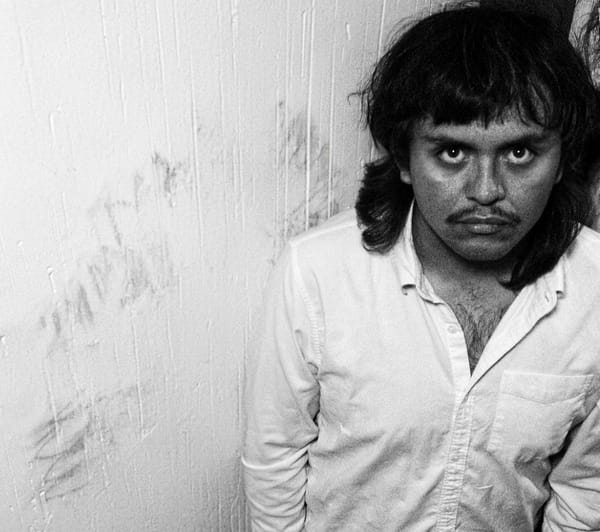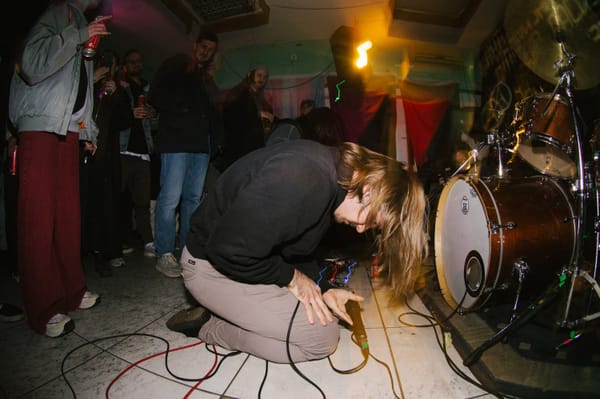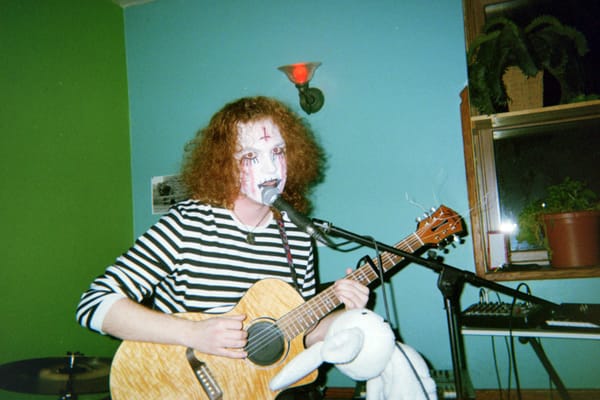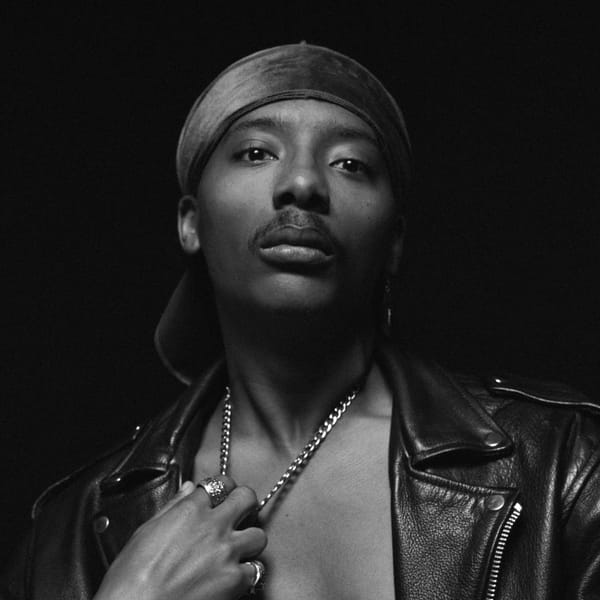
Ray Gun Youth asks, "what can we do to make this a heaven of our own?"
"I think ex-Mormons who listen to the album will definitely be like, soyjak face pointing at it."
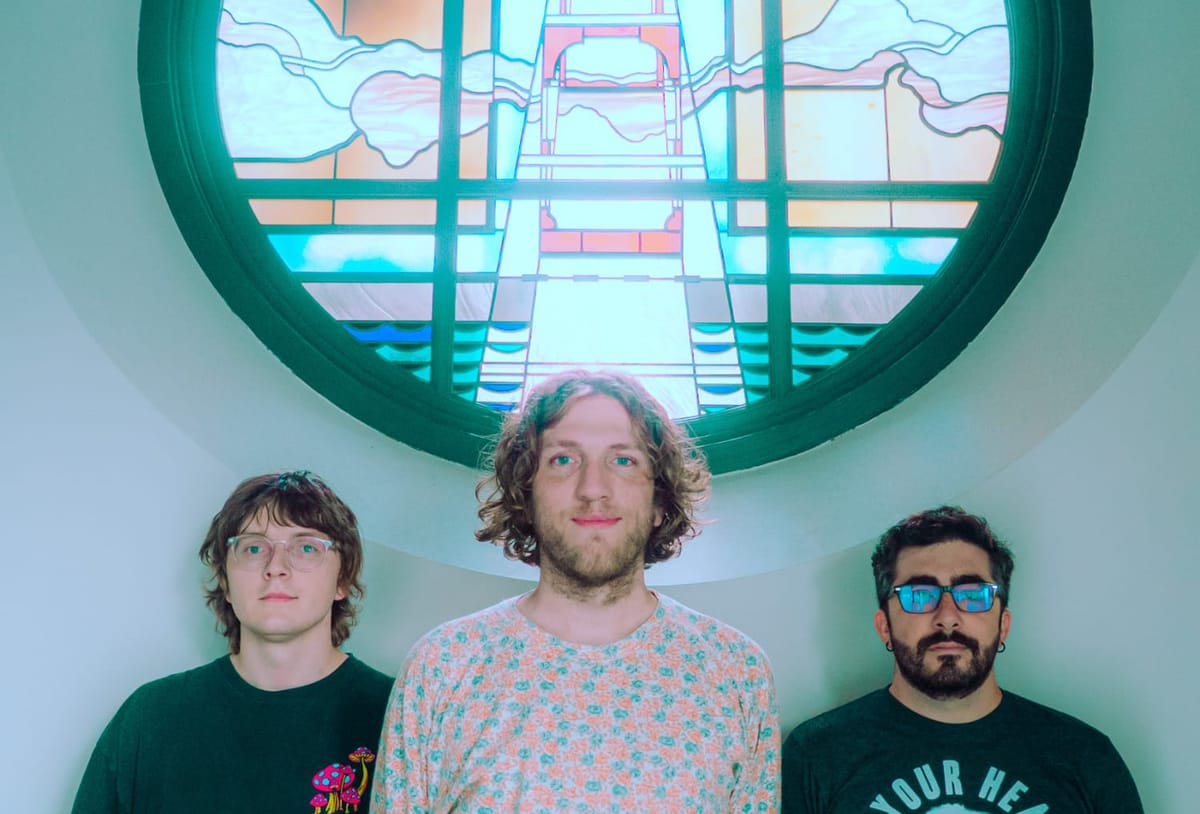
Ray Gun Youth are based out of Minneapolis, and we ask that you share this list of Minneapolis mutual aid funds and donate if you can.
In Mormonism, "second estate" refers to our time here on Earth. According to the faith, you're to be sufficiently pious in this life so that you can "earn" your "third estate" in the afterlife. Basically - follow arbitrary oppressive rules and be miserable your whole life and hope it pays off in the afterlife.
On Ray Gun Youth's debut album, Second Estate, they say: fuck that, I'm gonna enjoy the here and now. "I feel selfish, I feel great, I sold my second estate..."
Singer and guitarist Jake Frazier left Utah and the Mormon church in 2020, and the album is an exploration of the complicated feelings of disconnection, anxiety, and fear that came with starting life anew. Jake, drummer Hunter Thiesen, and bassist Travis Clark have created a fuzzed out psych punk album about what it means to massively reconfigure your life in order to live freely and happily.
I video chatted with Jake and Travis to talk about the album and Mormon lore, and occasionally, Jake’s pet bird Bowie interjected with a couple of affirmative squawks.
How does it feel now that the album's been out for a while?
JAKE: I think that immediately after it came out, I was really kind of paranoid, I was really doubting myself. But now that time has passed a little bit, I've had a few people reach out to me and say they really resonate with certain themes or certain lines. And honestly, that sort of feedback from even just a handful of people has been, like, the most validating thing that I could have gotten. Even more than a thousand people listening to it every day. It feels really special to me.
TRAVIS: Yeah, it was a year plus long project. There were a lot of different sounds on there that we haven't really done before. “Vaporize” is a little more gospel-y, we had some more punk-y stuff, and then just some more heartfelt mellow stuff. And it was neat to see that all come together in a way that felt coherent the whole way through. I finally got to say that I have a whole ass album.
JAKE: Yeah, that in and of itself is really cool. I mean, I had a high school band that put out an album, like, 10 years ago. But this feels different. We actually have friends who listen to it, and it feels very meaningful.
How do you guys approach songwriting?
JAKE: I usually write all the lyrics. Which is not to say I'm opposed to Travis or Hunter doing it. I think it's maybe an even split between songs we've come up with where we will jam on a riff. I think Travis has a gift for coming up with really good bass lines that can turn into full-fledged riffs and songs. And then sometimes I'll have these manic moments where I like, wake up at 3 a.m. and I’m like, “I gotta write this melody down!”
TRAVIS: Yeah, I feel very lucky that I just happened to link up with someone who writes a lot of lyrics because I've never had the brain for that. But yeah, if I am just kinda noodling at home and think, “oh this sounds like it's cool and could be something,” I'll send it to Jake. And then a week later there's a whole song out of it with lyrics. Or if Jake has a song that is like, most of the way there, I try to hone it in and figure out what I can add to the structure to make it feel more complete.
JAKE: I think we work together well creatively, really well. I think Travis helps me to organize my thoughts that are kind of everywhere into something more coherent, and he'll also help me rein in my more impulsive side.
And Hunter's been a great addition. We had a different drummer before, so Hunter's been around for about a year and he's been a really, really good addition. I think he kind of naturally gets the vibes that we're going for. He's managed to lock into the sound that we're going for, and the way he approaches the percussion just slots in perfectly, honestly, and I'm really happy about that.
I'm glad that you brought up “Vaporize”. Out of all the songs on the album, that one really stood out to me.
JAKE: So, I lived in Utah until 2020, and I left the Mormon Church around the same time, so fairly recently. And, you know, I think it's a cult. I think it's a really bad thing to be a part of, for the most part. But they use music very effectively, and I grew up hearing a lot of choir songs that were, at the time, really inspiring.
The idea with “Vaporize” was that I wanted to take some of that feeling of grandeur and awe of a choir, and even have the chord progression and the structure of a gospel song, and juxtapose that with lyrics that were more reflective of the negative part of what I felt growing up Mormon. The gist of the lyrics is basically me at a really low point and thinking that it would be better if God hit me with a lightning bolt so that the stuff that makes up my body would be put to better use, like feeding plants or something. Which is really dark, but I used that imagery because I think that, honestly, growing up Mormon made me feel that way a lot. If I couldn't do things to the extremely arbitrary and frankly unrealistic standards of being a righteous Mormon - I mean, you have to pass an interview with a church elder every six months or so to make sure you're still “worthy” or else you get publicly shamed. It's really intense. And so it was kind of a way to get a lot of those feelings out in song form.
And I think it ends on a little bit of a hopeful note, which I thought was apropos given that I did make it out of Mormonism. That song, more than any other song, is reflective of what it's like to grow up and be in an environment that really demands you be something that is just impossible.
Can you tell me a little bit about the album title and how that ties into your upbringing?
JAKE: Okay, so Joseph Smith, the founder of Mormonism - not a great guy, and he had some wacky ideas. He was big into esotericism, and he combined that with Christianity in a way that hadn't really been done before - I think that modern Mormonism whitewashes that a lot.
One of Smith’s big things is his concept of heaven and his concept of how you get to heaven. This is gonna sound like a South Park episode, but - Mormons believe that in heaven, before everyone was born, there was a war between Satan and God, and the people who followed Satan became devils and stuff, and the people who followed Jesus became everyone who was born on Earth. And crucially, Satan's guys were kicked out of heaven.
And so heaven in Mormonism - you know, before you were born - is referred to as your “first estate”. And keeping your first estate means that you were faithful and on the side of Jesus before you were born. Joseph Smith would refer to Earth as the “second estate”. And if you follow God's rules here on Earth, then you get to inherit your “third estate”, which is heaven after you die. And Mormons believe that when you die, you get to become a God of your own and have like, infinite babies with thirty wives or what have you. People say you get to have your own planet, but it's more than that…you get to be a God, essentially, if you do all the Mormon stuff correctly. And that's your third estate.
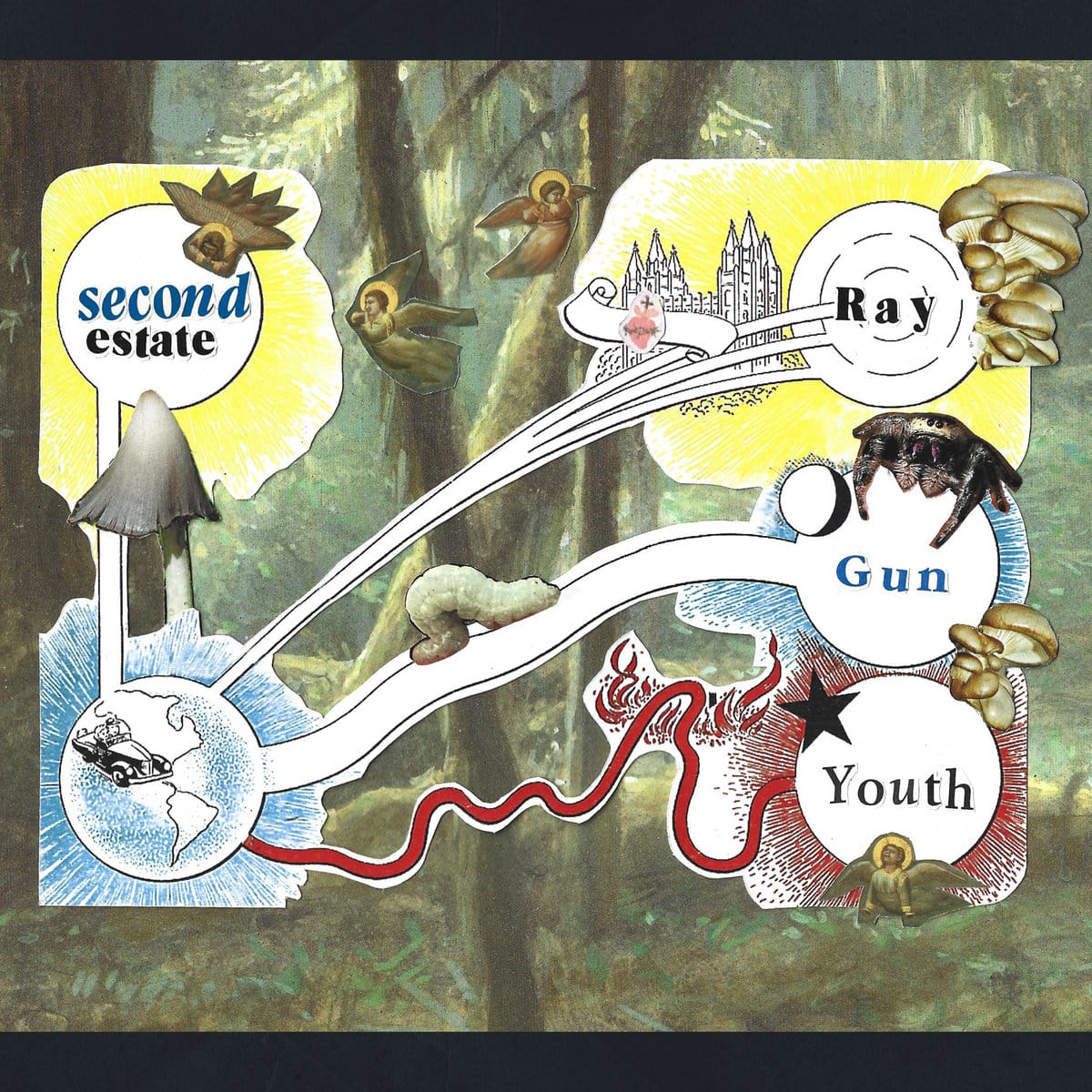
There's other levels of heaven and Mormonism, which the album cover kind of alludes to. My partner Maya did the art for it. There's three circles you can see on the album cover, and they're all forms of heaven. There's three tiers of heaven, and the top tier is the one where you get to become God.
So the album name refers to our time on Earth?
JAKE: Yep. For Second Estate as an album, I wanted to kind of subvert those ideas. There's a lot of songs that talk about connecting with nature and finding one's place in the world. “The Way It Should Be” specifically comes to mind - the lyrics of that song are pretty much about how, like, we're all just part of the Earth and have needs, and that's fine. And so the concept of Second Estate is - hey, let's make this Earth the most important thing, and not give up the now for something that may or may not happen in the future, as predicted by Mormonism. So the idea is, what can we do to make this a heaven of our own? Those are feelings that I've had upon exiting Mormonism and I’ve been trying to reframe my life in that way.
TRAVIS: Cult nonsense aside, the Mormon lore is a little bit cooler than Catholic lore.
JAKE: Well, the Catholic aesthetics win, though, for sure. That's why we put Catholic cherubs and stuff on there. I mean, we've got Mormon shit on the cover, too, but it's cartoonish and silly.
I do really like the album artwork. I'm glad you gave some additional context to it.
JAKE: Oh, yeah. There's lots of little Easter eggs throughout that. I think ex-Mormons who listen to the album will definitely be like, soyjak face pointing at. The title itself is from the Book of Mormon.
Travis, do you come from a similar background?
TRAVIS: Yeah. Jake's upbringing definitely sounds more intense, but I grew up Catholic, so I do relate to growing up in constant guilt. Mine was more so, like, “oh, if something happens and I die tonight, I'm just gonna go to hell because I haven't gone to confession!” That kind of thing. I am also no longer religious and resonate with the themes of finding purpose without having the religion aspect to fall back on, and the general theme of being disgruntled by religion and finding meaning after.
Yeah, we were vaguely kinda-sorta Catholic, so there was a little fear of sin there. But even outside of the religious aspects, there were parts of the album I really vibed with, especially themes about, like, the body and returning it to Earth. There’s a lot of stuff to connect with even without a super religious background.
JAKE: Yeah, and I kind of intended for that because I think there's a lot of people in my life who are coming to terms with huge gargantuan changes in their worldview. Whether it be coming out as queer or trans or what have you, or whether that be moving or whether it be realizing that, “hey, the society we live in is broken.” I think that the message of being disappointed by something you once aspired to and having to kind of re-calibrate is a universal experience for most people.
And I think that that's something I had in mind as well, because there's other aspects of myself that I've been figuring out at the same time that kind of went into the album. You know, I got diagnosed with autism recently as well, a year or two ago. And that's been putting a lot of things into perspective for why I feel different from other people a lot of the time. One of the things I always joke about is there are, like, a lot of Mormons who won't follow all the rules because they kind of don't give a shit. And I always would follow the rules, really exactly. Because being an autistic person, I think that that structure really gave me meaning in a way, that kind of had extra oomph. And so after leaving Mormonism, I look back, and I'm like, “oh, you guys weren't even doing all the stuff you're supposed to do!” So, I would say even among ex-Mormons my experience isn't universal.
Moving away from the themes and more into musical influences - there's a lot of, like, psych rock going on here.
JAKE: We love psych rock. Hell yeah.
And I’m assuming David Bowie is an influence, since you have a song called “Bowie”?
JAKE: So, “Bowie” is actually named after my bird, because it's about Bowie! But I do enjoy David Bowie.
TRAVIS: I'll start by saying that Jake and I initially bonded over message. Like, we started talking on Platonic Bumble...
JAKE: Platonic Bumble for guys.
TRAVIS: ...And I think we both had something about wanting to be in a band in our bio or something. We were messaging and it came up that we both liked Pup and Psychedelic Porn Crumpets. So that was kind of an immediate bond and how we knew we should hang out. But as for growing up, my gateway into liking rock and metal was the Lords of Dogtown soundtrack, an old skateboard movie. It had “Iron Man” on it, and that riff just kind of blew my mind and changed things forever. So middle school, I was listening to a lot of that kind of stuff, Black Sabbath and Iron Maiden. Then high school was more like, metalcore and nu metal, like Slipknot and Mushroom Head. And then in college, I tried being a music major. I failed real hard at it, but I stayed friends with a bunch of music kids.
But being in a three piece, it just feels like it fits me well. I get the freedom to have a little more fun with it.
JAKE: I've been inspired by going to a lot more hardcore shows here in the Twin Cities. And I also like sludge metal. And I've been listening to a lot of Joan Baez and Michael Hurley. Something I really love about folk and country music that I've taken into all of my writing has been simple, repetitive melodies. This is going to sound really hokey, but I really love a hook and a good memorable melody because throughout history, humans have used song to tell stories and communicate with each other. One of the functions of the catchy earworm hook melody was to make it more memorable so you can pass it on to your kids and to other people. And I think that that's kind of beautiful. I try to incorporate melodies that people can remember and sing along for kind of that reason.
I do like that idea of locking in the moment with the music. Archiving a moment in time in a sing-a-long way.
JAKE: Right. I think it's like really beautiful. It's almost like hacking our own minds to remember stuff better. It makes me feel very human, you know? Like people have done that shit for forever. I imagine some medieval peasant singing a song to their kid.
Did you record this in a studio or at home?
JAKE: We recorded at Soft Cult Studio in northeast Minneapolis. I work as a freelance engineer there, so we had access to the space. We rented the studio time and I mixed and engineered it. Shout out to Matt Castore and the whole gang there. They are incredible. They've recorded a ton of Minneapolis music that's just killer.
TRAVIS: That's another thing I'm grateful for - that I linked up with someone who just knows how to do all that stuff and has the ear for how things need to be mixed and sound. Cuz that's another thing that I just am useless with. It was really interesting being in a studio for the first time. Jake did a great job getting all of that organized and putting that into the final product.
That covers my core questions, but I always like to give space at the end to let you shout out a fun fact about the album or hype up a little production flourish.
TRAVIS: The main riff of “Face It!!”, at least the bass riff, was something that I put together in college - almost 10 years ago at this point. I was trying to learn how Ableton worked and how to record something from bass onto computer. It was a more slowed down version of that bassline that I came up with. I put that in the memory bank, like, “oh, this could sound cool with something someday.” And then all these years later, it ended up turning into a full song!
JAKE: Yeah, that riff has been sitting around for a while. I think when we first jammed the first time, it was one of the first riffs you showed me. I think that and “Spore War” were maybe the two first songs we ever started jamming on.
I'm really proud of the production, honestly. So for the guitar - this is maybe a bit of production nerd stuff, but I'm sure someone will appreciate this - I wanted to get a really big guitar sound without just recording a million overdubs, kind of Siamese Dream style. And so we recorded it through two amps and then panned one hard right, one hard left, and then we re-amped it through two other amps. It's essentially me playing the guitar through four separate amps. And that's how we got the really massive guitar sound. I also think the drums turned out really well for a DIY recording. Props to Hunter.
TRAVIS: Yeah, Hunter’s not here, so we gotta give him his shout outs.
JAKE: He came in and hit the ground running, helping us write a lot of these songs and get shit down and learning our old songs that we would play at shows in the meantime.
TRAVIS: Big ups to Hunter.
JAKE: Other fun fact - there is a sample of Bowie during the bridge of “Bowie.” It's me and my partner talking to him. And there's also a sample of Hunter's dog. The reason the song is called Bowie Bowie is because there's actually two Bowies. There's Bowie the Bird and Hunter had a dog who passed away named Bowie, who was a real sweetheart. And so we also put a sample of Bowie the dog in the Bowie song. It kind of continues the whole connected with nature theme, but through cute critters.
TRAVIS: My cat hasn't earned a song yet. She's got to get her act together.
Jake, please drop a Mormon Easter egg to close us out.
JAKE: Okay sooo, the cover. The image that we used was pulled from a 1950’s Mormon church manual for teaching people about what they call “The Plan of Salvation,” which is essentially that map you see on the cover. And it kind of lays out what I was talking about earlier - it’s a map that shows pre-Earth life, or first estate, and then Earth, and then it shows three paths to each of the three levels of heaven.
And then as far as other imagery on the cover, there's a picture of the Salt Lake City Temple, which is probably the most famous Mormon building. I got married in that building when I was 22. I was married when I was Mormon and I got divorced in 2023. It’s encouraged to get married, like, as soon as possible to pump out babies. We didn't put it on the cover because of that, but I thought that that was funny. Fun fact!
Support Second Estate on Bandcamp, and follow Ray Gun Youth on Instagram.